
Custom AI Tutor Development: Build, Buy, or White-Label

Custom AI Tutor Development: The Decision Behind the Search
If you are researching how to get a custom AI tutor, you have probably already decided that a generic chatbot is not enough. The real question is not whether a personalised AI mentor would help your learners. It is how you get one that actually fits: buy a ready-made platform, license a white-label product, or commission a custom build around your own content.
That decision is what this guide is about. Most organisations arrive here because a finished tool falls short at a point that matters: it does not know their curriculum, it cannot carry their brand, or its data handling rules it out. A wrong choice costs twice: the budget, and the months lost to a tutor nobody ends up using. You do not need convincing that a tailored AI tutor would help. You need to know what it costs, how a build runs, and how to tell a serious development partner from an expensive mistake.
What a Custom AI Tutor Is, and When to Build Your Own
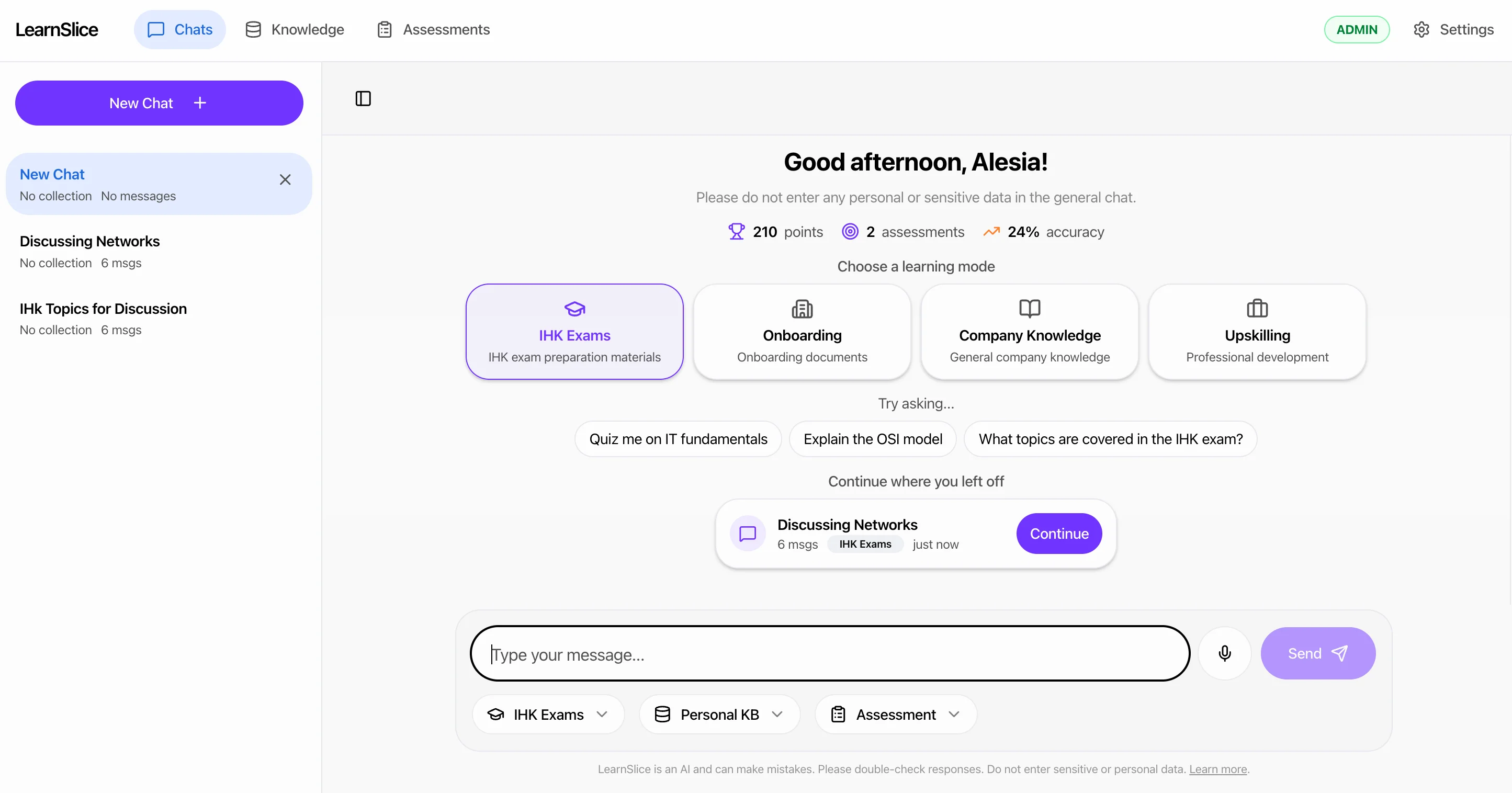
A custom AI tutor is a learning assistant built around your own curriculum and data, not a generic chatbot. It answers from your content, guides each learner along an adaptive path, gives feedback, and runs under your brand and your data-protection rules. You commission it once and, with the right contract, own the result.
The difference from an off-the-shelf assistant is grounding. A generic chatbot answers from the open internet; a custom AI tutor answers from your material, follows your didactic structure, and cites its sources. Building your own is worth it the moment that grounding matters: when the content is too specific for a standard tool, when the tutor has to look and feel like yours, when data protection is non-negotiable, or when you want it to grow with your own knowledge over the years.
Who Builds a Custom AI Tutor
Three groups commission custom AI tutors, for different reasons:
- Learning and training providers (edtech, course providers, academies). They own the content and the client relationship but often lack in-house software engineering. A custom AI tutor on their own brand lets them offer a modern product without building an engineering team of their own, and keep the customer to themselves.
- Companies and corporate L&D. They want a tutor grounded in their own processes and knowledge: onboarding that adapts to each role, compliance training that looks like their business, upskilling that pulls from internal documentation. For a sense of where this pays off in practice, see our overview of AI tools for vocational training.
- Universities and higher education. Course-grounded tutors that answer from the reading list, respect academic integrity, and integrate with the LMS. The buying cycle is longer and procurement-led, but the fit for a data-sovereign, curriculum-grounded build is strong.
Across all three, the common thread is the same: they train large groups and need the tutor to fit their content exactly, which is precisely where building beats buying. Course providers preparing candidates for a regulated exam are the clearest case, worked through in our guide to a learning platform for training providers.
Buy a Platform, License White-Label, or Commission a Build?
There are three routes, and the right one depends on how specific your content is and how much control you need. The direct comparison:
| Criterion | Buy a platform (SaaS) | License white-label | Commission a custom build |
|---|---|---|---|
| Entry cost | low, monthly per user | medium, licence plus setup | higher, one-off build |
| Cost over the years | recurring per-user fees, ongoing | recurring licence, ongoing | one-time investment, then operation |
| Fit to your content | limited, you adapt to it | good, within the product’s limits | exact, it adapts to you |
| Time to launch | instant | weeks | weeks to months |
| Your brand | vendor’s, mostly | yours | yours |
| Data control and sovereignty | with the vendor | shared | with you |
| Ownership of the result | none | none | with you |
The difference many see only later is the cost over time. A subscription is billed per user per month, usually indefinitely: the more learners you have and the longer you use it, the more it costs, and in the end you own nothing. A custom build is a one-time investment. You pay once to build it, then only for operation, and you use the same solution for years.
Past a certain number of learners, a build can come in below the accumulating licence fees, and it fits you exactly rather than the other way around. That is why building pays off above all for organisations that train large groups: training providers, universities, and companies with many learners.
Not sure whether to buy, white-label, or build? Outline your case in a free 30-minute strategy call, no pitch, and get a straight answer on which route fits, plus a ballpark price. Or request a no-obligation quote.
How Much Does It Cost to Build an AI Tutor?
Cost depends mainly on how deeply the tutor is grounded in your knowledge, how adaptive it is, and what it connects to. In short: expect a prototype from the mid four figures, a full custom build in the five to six figures, plus ongoing running costs. Here are the market reference points at a glance:
| Scope | Typical build cost | Timeline |
|---|---|---|
| Prototype / proof of concept (guided dialogue, your content) | ~5,000 to 15,000 dollars | 6 to 8 weeks |
| Custom AI tutor (adaptive paths, integrations, reporting) | ~30,000 to 150,000 dollars | 3 to 6 months |
| Full enterprise build (deep LMS integration, multiple roles and languages) | 150,000 dollars and up | 4 to 8 months |
| Operation (model API, hosting, iteration) | ~500 to 5,000 dollars per month | ongoing |
These are industry reference points reported by specialist development vendors, not quotes. A subscription tool, by contrast, runs from roughly 39 to 449 dollars per month for small teams, and enterprise per-seat pricing runs from a few dollars to over 100 dollars per user per month. That is the number a one-time build has to beat over time.
A focused AI tutor for a mid-sized team usually lands in the five figures, not the six-figure territory people fear, and it earns that back in per-seat licences replaced and trainer time saved. A short scoping call turns these ranges into a real number. Your actual price moves with four levers:
- Grounding in your knowledge. Indexing your content and getting retrieval accurate and source-cited (RAG) is the core of a real tutor and one of the biggest drivers of both value and cost.
- Adaptivity. Personalised learning paths and a mastery model that reacts to each learner cost more than a fixed question-and-answer flow, but they are often the whole reason for building.
- Integrations. Connections to your LMS, single sign-on (SSO), or standards such as xAPI and SCORM add effort.
- Scope and rights. More roles, more languages, white-label branding, and full handover of ownership all show up in the price.
How to Vet an AI Tutor Provider
An AI tutor lives or dies on a few things a generic dev shop rarely gets right. Vet a provider on these before you commit:
- Grounding, tested on your own content. Ask to see the tutor answer from your material with correct source citations, not a demo on generic data. Weak retrieval is the most common reason an AI tutor gives wrong or vague answers.
- Accuracy and guardrails. How does the provider stop the tutor inventing answers, and how do they measure it? Look for an evaluation set, sensible behaviour when the answer is not in your content, and a way to review and correct responses.
- Adaptivity that is real. A mastery model that adjusts to each learner, not a chat box with a progress bar bolted on.
- Model choice and where it runs. No lock-in to a single model vendor, an EU or on-premises hosting option, and a training-data opt-out so your content never trains a public model. Building on a self-hostable open model is one way to guarantee all three; see custom AI on open-source models.
- Integrations and operation. LMS, SSO, and xAPI, SCORM, or LTI, plus a clear plan for maintenance and iteration after launch.
The general vendor checklist, instructional design plus engineering, ownership of the code, and references, matters here too; our custom e-learning development guide covers it in full, and our 7-point check on GDPR-compliant AI tools covers the data-protection questions.
Your Data, Your Model, Your Tutor
An AI tutor raises data questions a static course never does, because it runs your content and your learners’ questions through a model. Three of them decide whether it stays sovereign:
- Where the model runs. A tutor built for EU or on-premises hosting keeps prompts and learner data inside your jurisdiction, instead of sending them to a US API by default.
- What happens to your data. A training-data opt-out, plus clean separation between your retrieval index and the base model, keeps your content and your learners’ questions out of anyone’s public training set.
- Who owns the result. When the code, the prompts, and the retrieval setup are yours, the tutor is an asset you control, not a rented endpoint you can be cut off from or repriced on.
For regulated and public-sector buyers, the same build should be EU AI Act ready from the start; retrofitting compliance later costs far more.
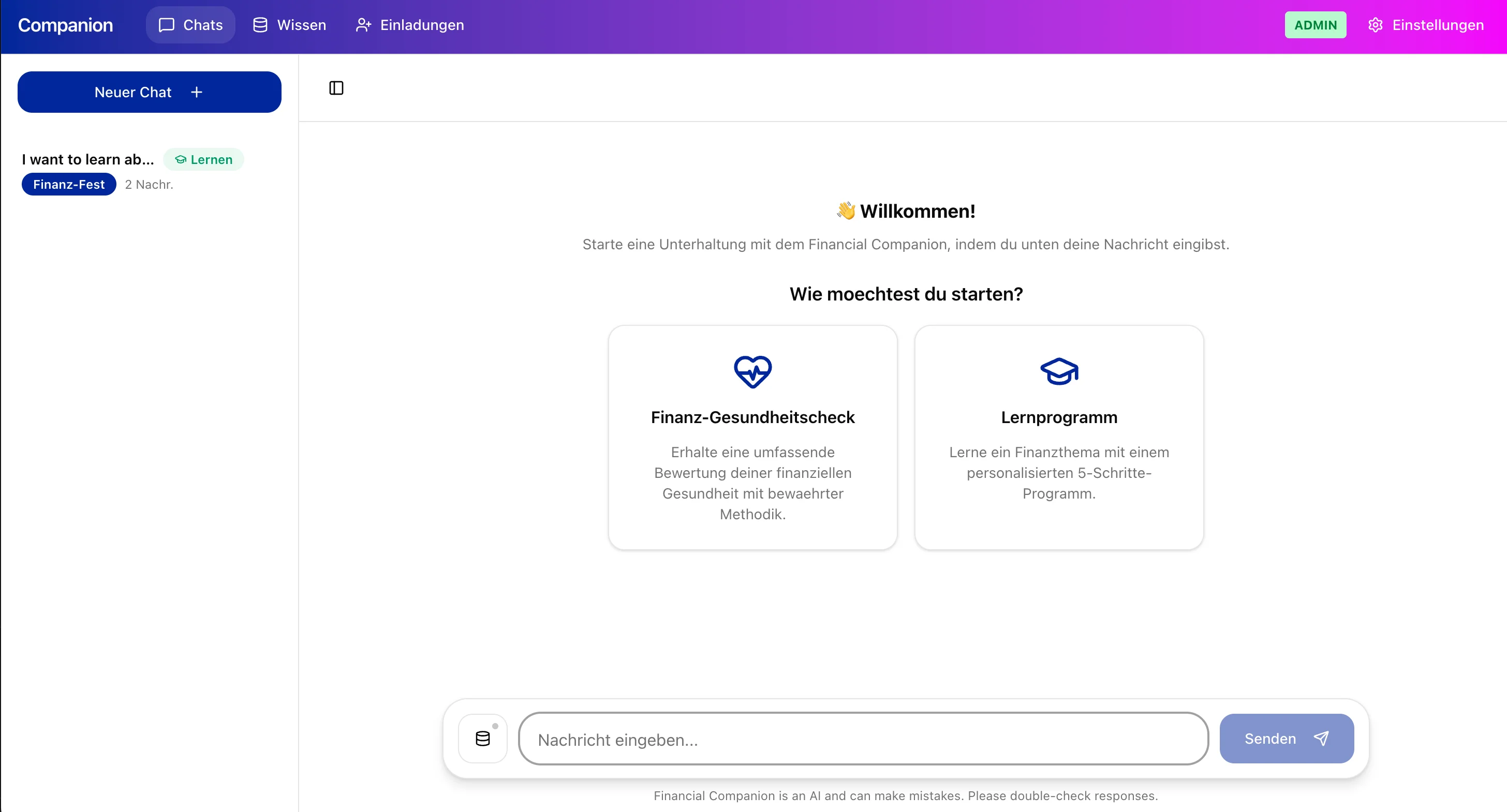
That is what our offering is built around. To see how LearnSlice builds custom AI tutors with EU hosting and ownership of the result, visit custom e-learning development, or try our live AI tutor demo with sample data first.
Start Small, Then Scale
The lowest-risk way into a custom AI tutor is not a six-month contract; it is a small first version grounded in a slice of your real content and tested on real learners. If it answers accurately from your material and people actually use it, you scale it. If it does not, you have spent weeks, not a budget.
Let’s outline your AI tutor. Request a no-obligation quote or book a free 30-minute strategy call: no pitch, and a concrete roadmap plus a ballpark price for your own AI tutor at the end. To put it to work in apprenticeship and workplace training, see LearnSlice for companies, and for vocational schools, LearnSlice for schools. Training providers in the US can try the AI tutor demo on sample course material.
Written by
LearnSlice Team